
Marine Electrical System Diagnosis and Repair
Expert diagnosis and repair of marine electrical systems including wiring, batteries, charging systems, and onboard electronics. We resolve shorts, corrosion damage, and failed components to restore safe and reliable electrical operation.
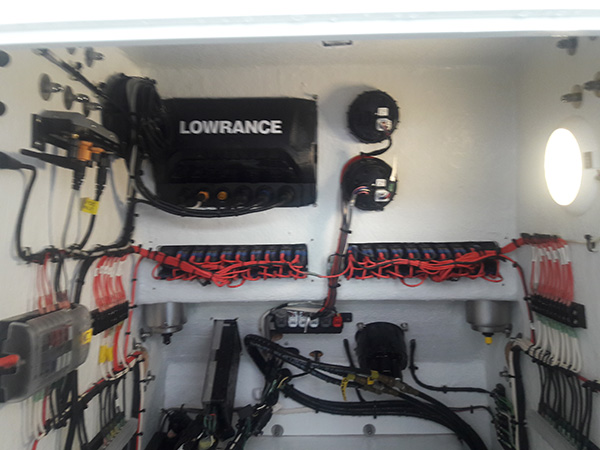
Electrical problems on a boat rarely announce themselves clearly. A blown fuse or dead instrument might trace back to corroded wiring buried behind a panel, a failing alternator, or water intrusion into a connector. We track down the source and fix it.
Common problems we fix
- Battery keeps dying even after charging — A parasitic draw, a failing battery cell, or an underperforming charging system can all cause this. We test the battery under load, check the alternator output, and trace any draw the boat has at rest.
- Chartplotter or VHF radio stopped working — Salt air corrodes terminal connections at the back of electronics over time. Often the unit itself is fine and the fix is at the connector or the fuse protecting that circuit.
- Breaker trips every time I run the bilge pump — A motor drawing too many amps usually means it's working against a blockage, worn bearings, or a float switch stuck on. We check the pump, the float, and the wiring before replacing anything.
- Navigation lights flicker or won't turn on — This is almost always corrosion in the fixture socket or a broken ground connection. In a salt environment, light sockets corrode from the inside out and often look fine until they fail completely.
Why Marine Electrical Problems Are Hard to Trace
A boat's wiring runs through bilges, under gunwales, and behind panels where moisture collects and salt air reaches every terminal. One corroded splice can drop voltage across a whole circuit without blowing a fuse. Symptoms show up far from the actual fault. Proper diagnosis means testing at multiple points in the circuit, not just swapping the most obvious part.
Salt Air and Lightning: The Two Main Culprits Here
On the Gulf Coast, corrosion is constant. Even boats kept on lifts in Lemon Bay or Charlotte Harbor see accelerated terminal and connector degradation compared to freshwater boats. Lightning is the other major factor. A strike doesn't have to hit your boat directly to damage electronics. A nearby strike can surge through the water and fry unprotected components across multiple systems.
- Corroded battery terminals and cable ends
- Green or white oxidation on connector pins
- Burned or melted wiring near strike entry points
- Failed transducers, GPS antennas, or depth finders after a storm
Repair or Replace? How We Decide
We replace what's actually failed and repair what's repairable. A corroded terminal gets cleaned or replaced. Damaged wiring gets properly spliced with heat-shrink marine-grade connections, not electrical tape. A component that tested bad gets replaced. We don't recommend swapping parts on a guess.
Can I just add a second battery to fix my battery drain problem?
My boat was near a lightning strike. What should I get checked?
Is it safe to keep using the boat if one circuit isn't working?
Why does marine wiring cost more to repair than automotive wiring?
Related services
Fiberglass Hull Repair
Professional fiberglass repair and restoration for cracked, delaminated, or damaged boat hulls. We restore structural integrity and finish to manufacturer standards, protecting your vessel from water intrusion and further damage.
Learn moreMarine Engine Repair & Rebuilding
Comprehensive inboard and outboard marine engine diagnostics, repair, and rebuilding services for all major brands. We restore lost power, resolve overheating issues, and get your engine running at peak performance.
Learn moreOutboard Motor Service
Full-service maintenance and repair for outboard motors including tune-ups, fuel system cleaning, impeller replacement, and lower unit rebuilds. Keep your outboard running reliably season after season.
Learn moreBook your boat electrical system repair today
Fast response, upfront pricing, satisfaction guaranteed.