Marine Electronics Installation and Integration
Installation and integration of GPS chartplotters, VHF radios, fish finders, autopilots, and AIS systems. We ensure proper mounting, wiring, and NMEA networking so all electronics communicate seamlessly.
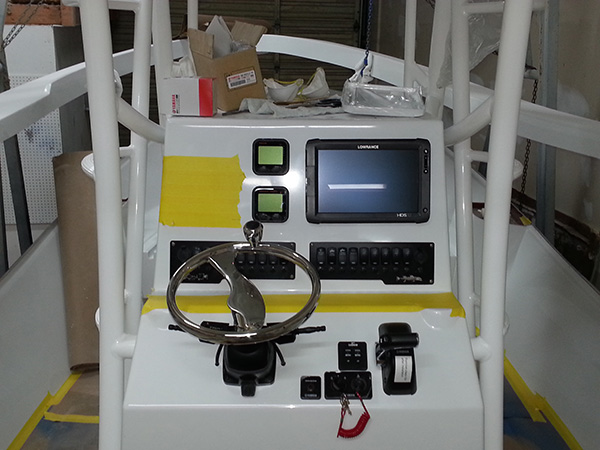
Most electronics problems start at the installation, not the unit itself. Loose connections, poor antenna placement, and wiring that isn't rated for a marine environment cause failures that show up months after the job.
Common problems we fix
- Chartplotter and Fish Finder Won't Talk to Each Other — This is almost always a NMEA 2000 or NMEA 0183 wiring issue, a bad backbone terminator, or mismatched baud rates. Proper network setup at installation prevents it.
- VHF Radio Has Poor Range or Weak Signal — Short range usually means a damaged coax cable, a corroded connector at the antenna base, or an antenna mounted too low. On the Gulf Coast, corrosion at connections is the most common cause.
- Fish Finder Showing Noise or No Bottom Reading — Transducer placement and mounting angle matter more than most owners expect. Turbulence from nearby hull features or a transducer mounted too close to the engine wash causes interference and blank readings.
Why Saltwater Wiring Is Not the Same as Standard Wiring
Salt air corrodes standard automotive wire and connectors within a season. Marine-grade wiring uses tinned copper conductors that resist oxidation, and connections need to be sealed against moisture. In southwest Florida, the combination of heat, humidity, and salt spray is hard on any electrical system. A wiring job done with the wrong materials will start failing at connectors and terminal blocks well before the electronics themselves wear out.
What a Clean Electronics Install Involves
A solid installation covers more than bolting a unit to a bracket. Every step affects whether the system works reliably offshore or in a rainstorm.
- Route all wiring through conduit or loom away from heat and moving parts
- Use weatherproof, heat-shrink connectors at every termination
- Place VHF antenna as high as the mount allows for maximum range
- Set transducer angle and location for clean water flow at cruising speed
- Test NMEA network communication between all connected units before launch
Lightning Risk on Florida's Gulf Coast
This coastline sees some of the highest lightning strike frequency in North America during summer months. A direct strike or a nearby strike can destroy every networked device on the boat simultaneously. A properly grounded system reduces but does not eliminate that risk. Some boaters in this area disconnect antenna cables and power down electronics when storms are close, which is practical advice regardless of how the system is installed.
Upgrading vs. Adding to an Existing Setup
Swapping one unit out is straightforward if the wiring behind it was done correctly. Adding a second chartplotter, AIS, or autopilot to an existing network requires checking that the backbone has enough capacity and that all devices share compatible NMEA standards. Mixing older NMEA 0183 gear with newer NMEA 2000 hardware sometimes needs a gateway device to bridge the two.
- NMEA 0183: older standard, point-to-point wiring between devices
- NMEA 2000: bus-based network, multiple devices on a single backbone
- Gateway converters allow older and newer devices to share data
Can you install electronics on any type of boat?
What is AIS and do I need it?
My chartplotter screen is dim and hard to read in sunlight. Is that an installation problem?
How important is transducer placement for a fish finder?
Should all my electronics be on the same brand to work together?
Related services
Fiberglass Hull Repair
Professional fiberglass repair and restoration for cracked, delaminated, or damaged boat hulls. We restore structural integrity and finish to manufacturer standards, protecting your vessel from water intrusion and further damage.
Learn moreMarine Engine Repair & Rebuilding
Comprehensive inboard and outboard marine engine diagnostics, repair, and rebuilding services for all major brands. We restore lost power, resolve overheating issues, and get your engine running at peak performance.
Learn moreOutboard Motor Service
Full-service maintenance and repair for outboard motors including tune-ups, fuel system cleaning, impeller replacement, and lower unit rebuilds. Keep your outboard running reliably season after season.
Learn moreBook your marine electronics installation today
Fast response, upfront pricing, satisfaction guaranteed.